The global conversation about drinking water quality reveals a critical and troubling discrepancy: while some of the most dangerous contaminants are now regulated at the parts per trillion (PPT) level, many countries still allow general water quality to be measured — and dismissed — at the far more lenient parts per million (PPM) level. This enormous gap between the two scales is what we call the Purity Gap, and understanding it is essential to making truly informed choices about your water.
Two tiers of water standards
Regulatory limits across the globe operate on fundamentally different assumptions about what kind of contamination actually matters. These can broadly be divided into two categories.
Aesthetic standards (PPM)
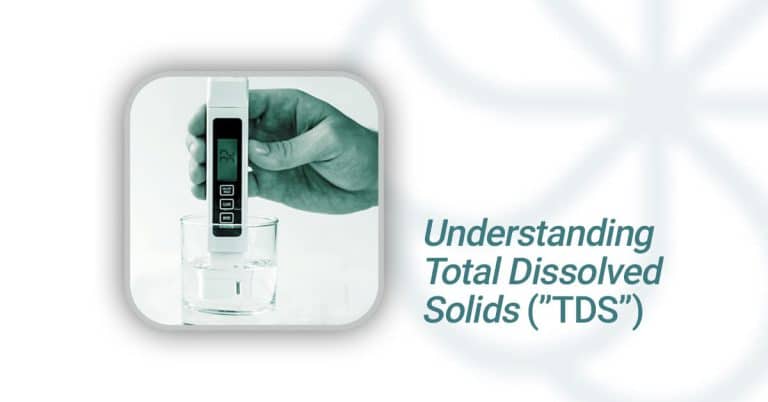
Measures like Total Dissolved Solids (TDS) primarily affect taste, scaling, and the general aesthetic quality of water. Many countries, including Australia and South Africa, set their TDS limits at 1,000 ppm or higher. These standards are not health-based — they exist to ensure that water tastes acceptable, not that it is genuinely safe from trace toxins.
Health-based standards (PPT)
Meanwhile, the most dangerous contaminants in modern water supplies — particularly PFAS compounds, commonly known as ‘forever chemicals’ — require limits set at a completely different order of magnitude. The proposed United States limit for certain PFAS compounds such as PFOA and PFOS is just 4 parts per trillion. The European Union, effective from 2026, sets its limit for the sum of 20 regulated PFAS at 100 PPT.
| Region | Contaminant / Measure | Standard / Limit | Type of Concern |
|---|---|---|---|
| United States (Proposed) | Individual PFAS (PFOA / PFOS) | 4 PPT | Health — ultra-trace toxin |
| European Union | Sum of 20 regulated PFAS | 100 PPT | Health — effective 2026 |
| Australia (ADWG) | Total Dissolved Solids (TDS) | Up to 1,000 PPM | Aesthetic — taste / scaling |
| South Africa (SANS 241) | Total Dissolved Solids (TDS) | ≤1,200 PPM | Aesthetic — very high limit |
PPM vs. PPT: Understanding the scale
The difference between parts per million and parts per trillion is not simply a matter of degree — it is a difference in kind. Both are concentration measurements, but they represent vastly different scales of detection and risk.
| Unit | Abbreviation | Represents | Analogy |
|---|---|---|---|
| Parts Per Million | PPM (10⁻⁶) | 1 part in 1,000,000 | One minute in two years |
| Parts Per Trillion | PPT (10⁻¹²) | 1 part in 1,000,000,000,000 | One second in 32,000 years |
A concentration measured in PPM is one million times greater than the same number measured in PPT. When regulators set limits at single-digit PPT levels for PFAS, they are acknowledging that even vanishingly small concentrations of these compounds can pose serious health risks — risks that a TDS meter simply cannot see.
Why this matters for you
Most people testing their water with a standard TDS meter will get a reading in the PPM range. A reading of 200 ppm or 400 ppm might feel reassuring — well within the aesthetic guidelines. But that reading tells you nothing about what is happening at the PPT level. Your water could test “clean” by TDS standards while simultaneously containing PFAS, pharmaceutical residues, or other trace chemical compounds at concentrations that have been linked to cancer, hormonal disruption, and immune system effects.
This is the Purity Gap in practice: the metric most people use to evaluate their water quality is the one that is least informative about the risks that matter most.
The AquaFromAir approach to purity
AquaFromAir machines are designed to operate well beyond the minimum required by any regional standard. By starting the water production process from atmospheric moisture — air that has not passed through aging pipes, industrial runoff zones, or chemical-treated municipal systems — and then running the collected water through a comprehensive multi-stage filtration and UV sterilization process, AquaFromAir produces water with TDS readings consistently under 40 ppm in standard conditions. In real-world installations, including a villa in Bali where an AquaFromAir unit was monitored for six months, readings consistently came in under 10 ppm.
That is not a marketing claim — it is the natural result of starting with clean source air and applying rigorous filtration. The Purity Gap is not something AquaFromAir tries to close. It simply does not exist in the water we produce.