A machine that makes water from air sounds like science fiction. In practice it is grounded in a process that happens on every cold glass, every bathroom mirror after a shower, and every car windscreen on a humid morning. Atmospheric water generation takes that familiar physics and turns it into a reliable, self-contained water supply — independent of any pipe, well, or infrastructure. Here is exactly how it works.
The basic principle: Condensation
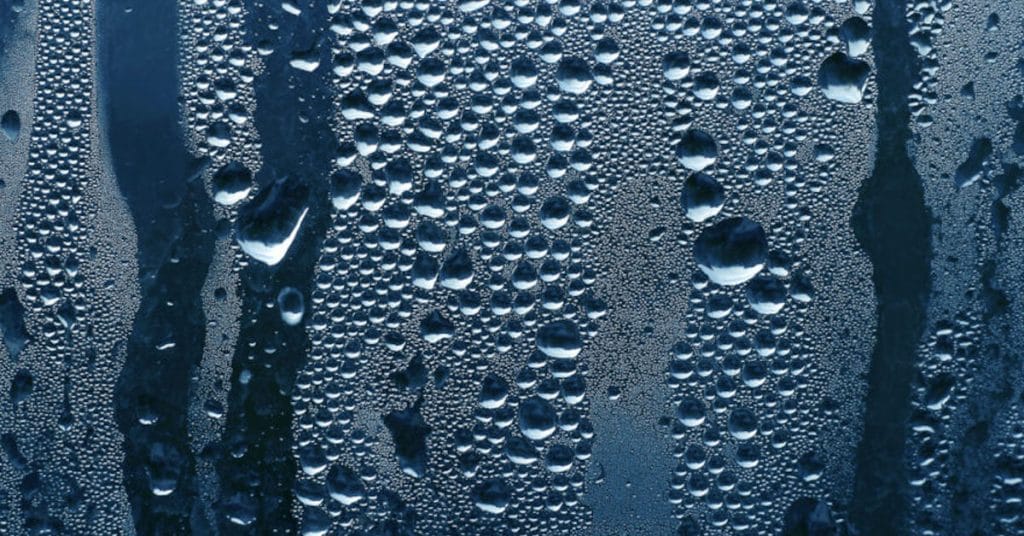
When warm, humid air contacts a cold surface, the moisture suspended in that air condenses into liquid water droplets. This is the same mechanism behind dew on grass, fog on a cold window, and sweat on a chilled can.
An atmospheric water generator (AWG) is engineered to trigger and collect this condensation deliberately — and then purify what it collects to a standard well above what comes from most taps.
An AWG does not filter existing water. It creates water from air — no source, no pipe, no dependency on infrastructure of any kind.
Step 1: Air intake
The process begins with a fan drawing ambient air into the machine through an air pre-filter. This first stage catches dust, particulates, and larger airborne contaminants before the air enters the system.
Air quality and humidity are the key input variables. In tropical climates — Bali, much of Southeast Asia, the Pacific Islands — warm, humid air is the everyday default. This is precisely why AWG performs so consistently in these regions.
Step 2: Condensation
The incoming air passes over refrigerated cooling coils — similar in principle to those inside an air conditioning unit. The coils chill the air below its dew point: the temperature at which moisture can no longer stay suspended as vapour and begins to condense into droplets.
Those droplets collect and drain into a holding chamber, where filtration begins.
On humidity: AquaFromAir units begin producing water at 25% relative humidity. At 60–90% — the everyday condition across tropical Asia — production runs at or near full rated output. The warmer and more humid the environment, the more water the machine generates per day.
Step 3: Multi-stage filtration
Condensed atmospheric moisture is naturally distilled — it has not come from a well, a river, or a municipal network. But it still passes through a full filtration sequence before reaching the storage tank.
- PPF 5µm filter — polypropylene pre-filter that removes fine sediment and suspended particles.
- PPF 1µm filter — a finer-grade pass that catches smaller particulates. Both PPF stages are fitted on 250L–5000L models.
- Activated carbon filter — removes chlorine compounds, volatile organic compounds (VOCs), and anything contributing to off-taste or odour.
- Mineral cartridge — adds back calibrated trace minerals. Purely distilled water is flat in taste and lacks the minerals that make water genuinely good to drink. The mineral stage corrects both.
Step 4: UV sterilisation
After filtration, the water passes through a UV-C sterilisation chamber. Ultraviolet light at the correct wavelength disrupts the DNA of bacteria, viruses, and other microorganisms — neutralising them without any chemicals.
This is the final quality gate before water reaches the storage tank, dispenser, or tap. AquaFromAir units in Bali field conditions consistently produce water testing at approximately 10 PPM total dissolved solids — compared to 500–1,000 PPM typical for municipal supply in the region.
Step 5: Storage and delivery
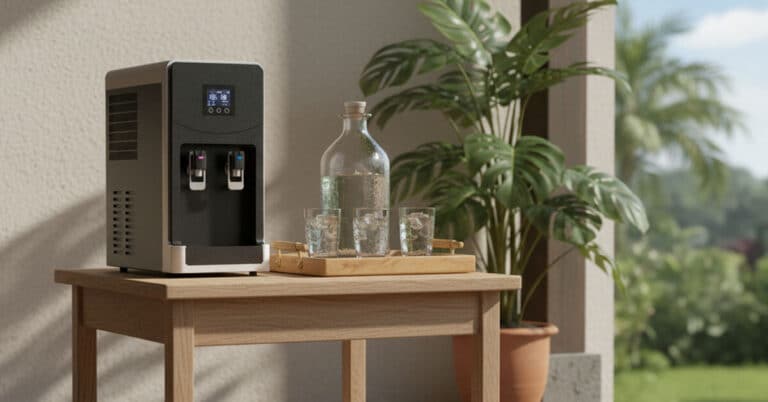
Purified water is held in a sealed internal storage tank. Sizes range from 7 litres on the 12L residential unit to large external tanks on commercial and industrial machines. The 12L and 20L models include hot and cold dispensing — a separate heating element and cold reservoir deliver temperature-controlled water instantly.
Output by model
Under optimal tropical conditions (approximately 30°C / 80% humidity):
| Model | Daily output | Typical application |
|---|---|---|
| AWG 12L | 12 litres/day | Studio, single person |
| AWG 20L | 20 litres/day | Family, small office |
| AWG 100L | 100 litres/day | Larger home, small commercial |
| AWG 250L–5000L | 250–5,000 litres/day | Hotels, F&B, industrial, community |
The answer to “where did this water come from?” is always the same: the air. And we took it from there.
Having spent years working with water across regions where clean supply cannot be assumed — and eventually making the full shift to atmospheric water generation — the thing that stands out most about AWG is not the technology. It is the simplicity of the answer it gives to the question of where the water came from.